What Is a Cluster in Pool? How to Spot One and What to Do About It
Quick answer: A cluster in pool is a group of two or more balls that are touching or sitting so close together that you cannot pocket them easily. Clusters are a big problem because they can stop a run out. Good players spot clusters early and plan how to deal with them. The main options are to break the cluster open with a planned shot, use another ball to bump it, or play a safety and let your opponent deal with it.
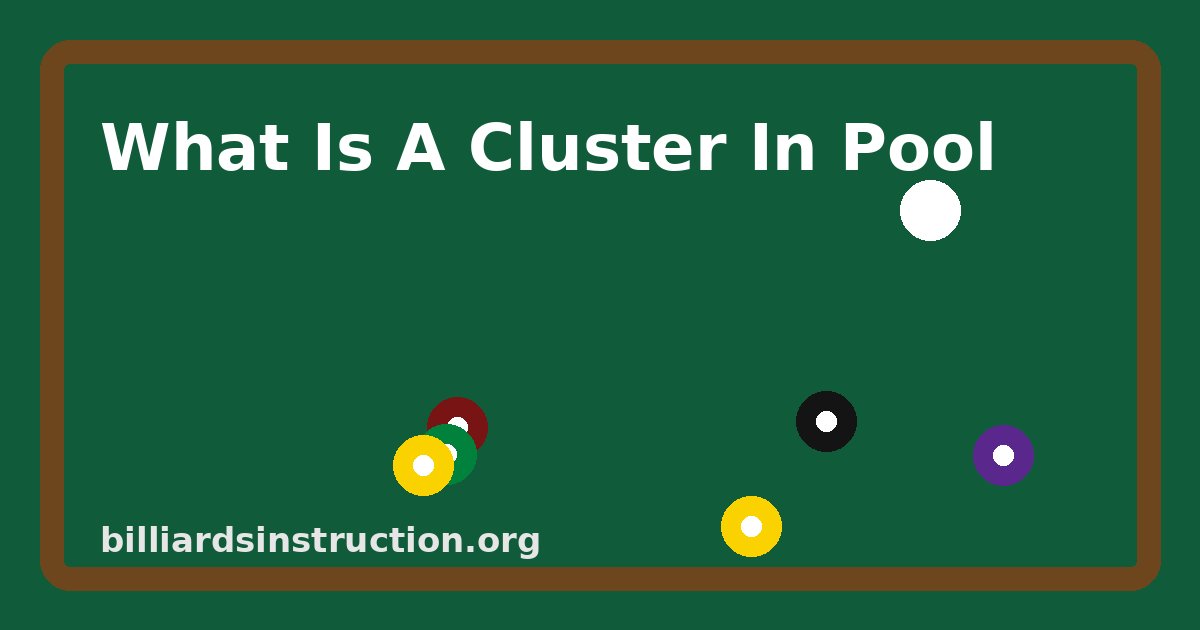
Clusters show up in almost every rack of 8 ball and many racks of 9 ball. Knowing what they are is the first step to beating them.
What Counts as a Cluster
A cluster is any group of balls that blocks easy shots. Some examples:
- Two balls frozen together on a rail.
- A ball stuck behind another ball near a pocket.
- Three or four balls bunched in the middle of the table.
- Your ball tied up with your opponent’s ball.
The more balls in the group, and the closer they are, the bigger the problem.
Why Clusters Matter
You can only run out if every ball you need has a path to a pocket. A cluster blocks those paths. If you shoot your easy balls first and leave the cluster for last, you may get stuck with no shot at the end.
That is why many players say: deal with problems early, while you still have other balls to use.
How Players Handle Clusters
1. Break It Out With a Planned Shot
Pick a shot where you can pocket one ball and send the cue ball into the cluster. Use medium speed so the balls spread but do not go everywhere. Plan where the cue ball might end up.
2. Use an Insurance Ball
Before you break a cluster open, make sure you have another easy ball to shoot next. That way, if the balls spread in a strange way, you still have a shot.
3. Bump It With Another Ball
Sometimes you can send an object ball into the cluster to move it.
4. Play a Safety
If there is no good way to open the cluster, play safe. Leave your opponent a hard shot and wait for a better chance. Learn more on what is a safety shot in pool.
Reading the Table
Before each inning, ask:
- Where are the clusters?
- Which of my balls are tied up?
- Which ball can I use to break them out?
- Do I have an insurance ball?
Spending a few seconds reading the table can save you a game.
Clusters and the Break
The break shot spreads the rack, but it does not always spread every ball. Clusters often stay near the rack area or along rails. After the break, look for them first.
Practice Idea
Set up a small cluster of two balls near the foot spot. Place one easy ball and the cue ball where you can pocket the easy ball and send the cue ball into the cluster. Try different speeds and see how the balls spread. Then try to run out what is left.
For more about how balls react, see what is a kiss shot in pool and what is a frozen ball in pool. Clusters often lead to a break and run only after they are solved, which you can read about in what is a break and run in pool.
Keep Reading on This Site
- What Is Dead Stroke in Pool? The Focused Zone Players Talk About
- What Is a Lag in Pool? How the Lag for the Break Works and How to Win It
- What Is a Masse Shot in Pool? How the Cue Ball Curves and When to Use It
- What Is a Kiss Shot in Pool? How Kisses Work and When to Use Them
- What Is a Double Hit in Pool? The Foul Explained Simply
- What Is the 90 Degree Rule in Pool? Predict Where the Cue Ball Goes
Frequently Asked Questions
What is a cluster in pool?
A cluster is a group of two or more balls that are touching or very close together, so they are hard to pocket.
Why are clusters bad?
They block paths to the pockets and can stop you from running out the rack.
When should I break up a cluster?
Most players try to open clusters early, while they still have other easy balls to shoot.
What is an insurance ball?
It is an easy ball you save so you still have a shot if breaking a cluster leaves the balls in a hard spot.
Should I always try to break a cluster?
No. If there is no good way to open it, a safety can be the smarter choice.